
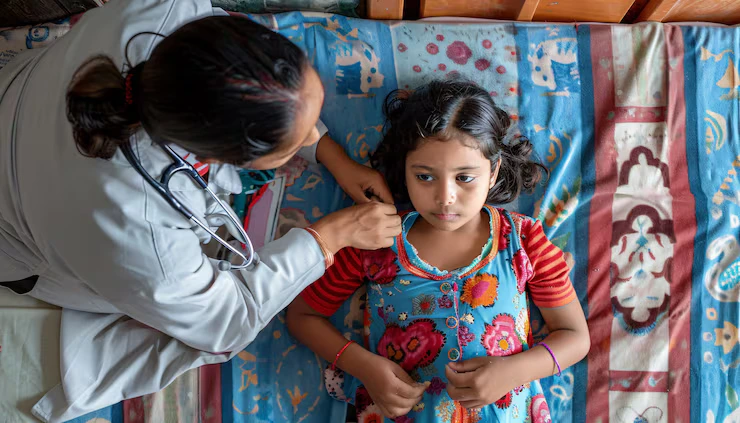
A pediatric inguinal hernia is a common condition seen in infants and children, where a small portion of the intestine or abdominal tissue protrudes through a weak area in the lower abdominal wall, usually in the groin region. It often appears as a soft swelling in the groin or scrotum that becomes more noticeable when the child cries, coughs, or strains.
Unlike some conditions that may resolve on their own, an inguinal hernia in children typically requires surgical correction to prevent complications.
In most children, an inguinal hernia is present from birth (congenital). During fetal development, the abdominal wall forms naturally, but sometimes a small passage in the groin area does not close completely. This opening allows abdominal contents to push through, resulting in a hernia.
Premature babies are at a slightly higher risk of developing this condition.
Parents may notice:
A visible or palpable swelling in the groin area
Swelling in the scrotum (in boys)
A lump that becomes prominent when the child cries or strains
Discomfort or irritability in older children
If the swelling becomes hard, painful, or associated with vomiting, it may indicate incarceration (trapped intestine), which requires urgent medical attention.
Diagnosis is usually made through a physical examination. In most cases, no extensive tests are required. However, if needed, an ultrasound may be performed to confirm the condition.
Surgery is the only definitive treatment for pediatric inguinal hernia. The procedure is safe, routine, and typically performed as a day-care surgery.
During the surgery:
The small opening in the abdominal wall is identified.
The protruding tissue is gently repositioned.
The defect is securely closed to prevent recurrence.
In many cases, minimally invasive (laparoscopic) techniques may be used, which involve tiny incisions, leading to less pain and faster recovery.
Your child will undergo a pre-operative evaluation to ensure fitness for anesthesia. Parents will receive instructions regarding fasting and hospital admission.
The procedure is performed under general anesthesia by a trained pediatric surgical team in a child-friendly surgical setting.
Most children recover quickly and can return home the same day. Mild swelling or discomfort is normal and usually subsides within a few days. Normal activities can typically resume within 1–2 weeks, as advised by the surgeon.
Seek urgent medical attention if your child experiences:
Sudden severe pain in the groin
Persistent vomiting
Redness or tenderness over the swelling
Swelling that does not reduce
Early treatment prevents complications and ensures a smooth recovery.
We provide safe, compassionate, and specialized surgical care for pediatric inguinal hernia. With experienced pediatric surgeons, advanced surgical techniques, and a child-centered approach, we ensure the highest standards of safety and comfort for both children and their families.