

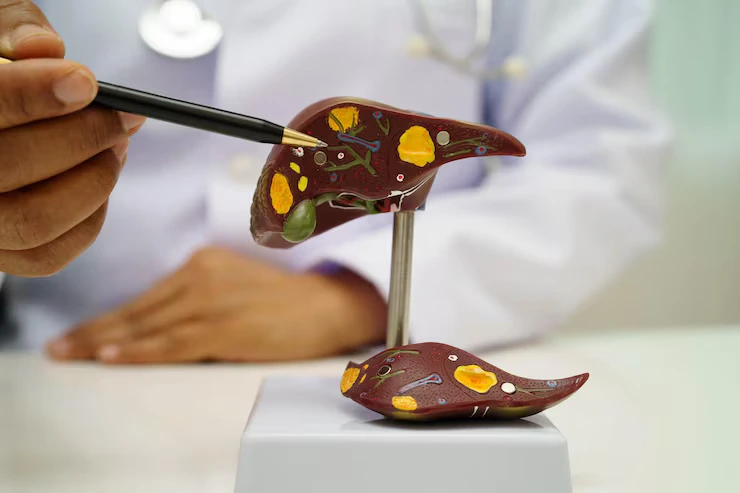
Biliary atresia is a serious congenital (present at birth) condition in which the bile ducts outside the liver are absent, blocked, or severely damaged. Bile ducts normally carry bile from the liver to the intestine, where it helps digest fats and remove waste products. When these ducts are blocked, bile builds up in the liver, causing progressive liver damage.
Biliary atresia is a rare but life-threatening condition that requires early diagnosis and prompt treatment.
Why Is Early Diagnosis Important?
If untreated, biliary atresia can lead to:
Severe jaundice
Liver scarring (cirrhosis)
Liver failure
Poor growth and nutrition problems
Early surgical intervention significantly improves outcomes and helps preserve liver function.
Signs and Symptoms
Symptoms usually appear within the first few weeks of life and may include:
Persistent jaundice (yellowing of skin and eyes) beyond 2 weeks of age
Pale or clay-colored stools
Dark yellow urine
Enlarged liver
Poor weight gain
Any newborn with prolonged jaundice should be evaluated urgently.
Diagnosis
Diagnosis involves:
Blood tests to assess liver function
Ultrasound of the abdomen
Hepatobiliary (HIDA) scan
Liver biopsy in some cases
Early confirmation of diagnosis is essential for timely surgery.
Treatment for Biliary Atresia
Kasai Procedure (Hepatoportoenterostomy)
The primary treatment is a surgical procedure called the Kasai operation. During this surgery:
The damaged bile ducts are removed
A loop of intestine is connected directly to the liver to allow bile drainage
The best outcomes occur when surgery is performed within the first 6–8 weeks of life.
Liver Transplant
If the Kasai procedure is not successful or liver damage progresses, liver transplantation may be required later in childhood.
What Parents Can Expect
Before Surgery
Your baby will undergo thorough evaluation to confirm the diagnosis and assess liver function.
During Surgery
The procedure is performed under general anesthesia in a specialized pediatric surgical center.
After Surgery
Close monitoring is required. Medications may be prescribed to improve bile flow and prevent infection. Regular follow-up is essential to monitor liver health and growth.
Long-Term Care
Children who undergo treatment require ongoing monitoring of:
Liver function
Growth and nutrition
Signs of complications
With early intervention and proper follow-up, many children achieve good quality of life.
Our Commitment to Specialized Pediatric Liver Care
Our pediatric surgical team provides comprehensive evaluation and advanced treatment for biliary atresia. With timely intervention, expert surgical care, and long-term support, we focus on protecting liver function and ensuring the best possible outcome for your child.